The Higgs Boson: Unlocking the Secrets of Mass
Hey there, fellow physics enthusiasts! If you're wrapping up grade 12 and your brain's buzzing with questions about why stuff has weight, buckle up. We're diving into the Higgs boson – that quirky little particle everyone calls the "God Particle." I remember my first encounter with it during a late-night cram session; it felt like peeking behind the universe's curtain. Let's chat about what it is, why it matters, and how scientists finally nailed it down.
Picture this: everything around you – your phone, your backpack, even the air you're breathing – is made of tiny bits called atoms. But atoms are just the start. Dive deeper, and you hit protons, neutrons, electrons. Go even smaller, and bam! Quarks and leptons, the real VIPs of the subatomic party. These particles zip around at near-light speeds, but here's the head-scratcher: why don't they fly off into oblivion? Why do they stick together to form the stuff we touch and feel?
The Field That Gives Mass
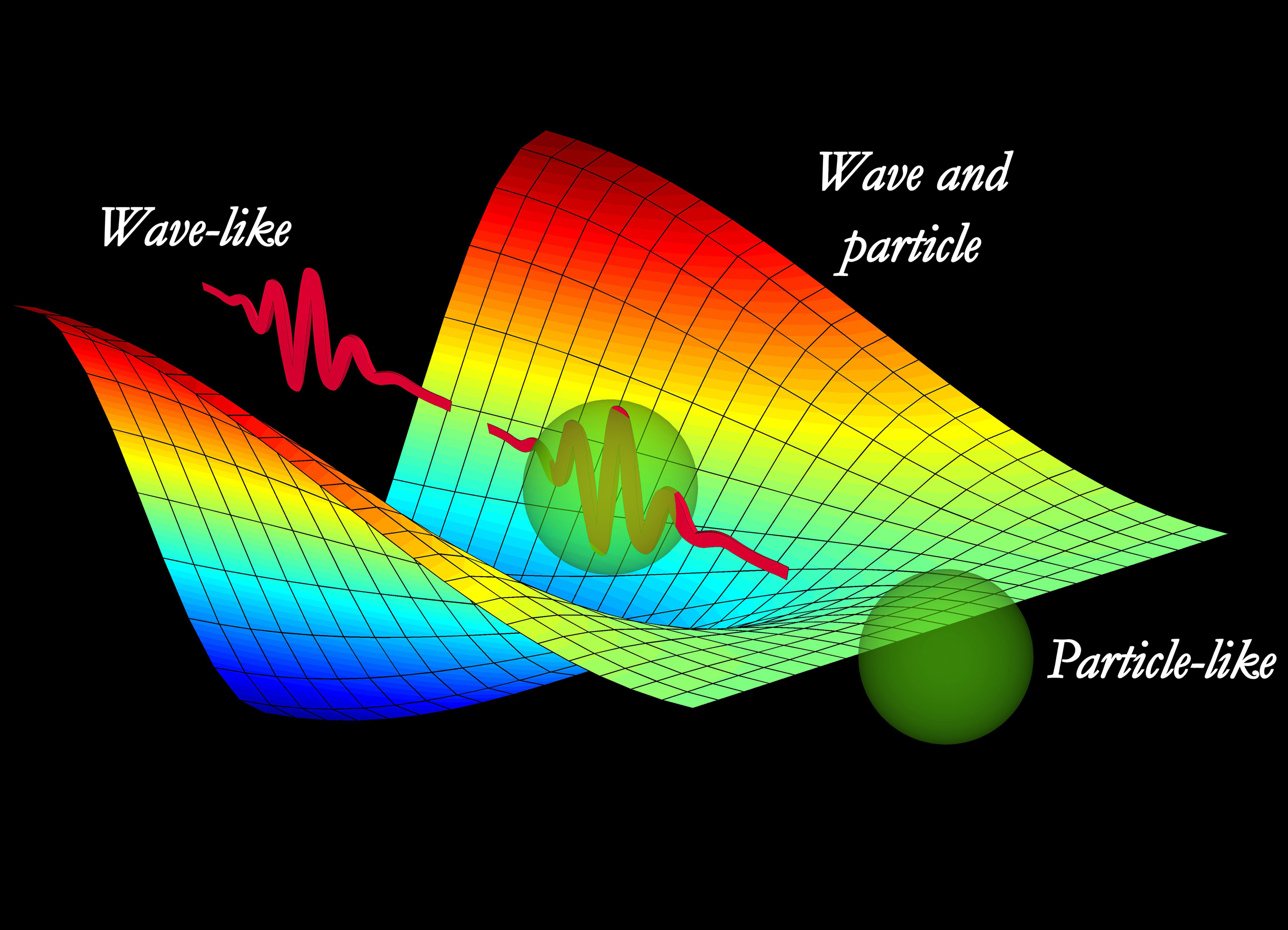
Enter Peter Higgs and his crew of theorists back in the '60s. They dreamed up this invisible "field" permeating all space, like an cosmic molasses. Particles interact with this Higgs field, and the more they "stick" to it, the heavier they get. It's not like dumping lead weights on them; it's more subtle, a drag that slows them down and gives them mass. Electrons snag a little, quarks grab more – that's why protons are chunkier than electrons.
But a field alone? That's like having Wi-Fi without the router. You need the ripple-maker: the Higgs boson. This particle is the excitation of the field, proof it exists. Spotting it? Tougher than finding a needle in a haystack made of needles. It decays almost instantly, leaving behind a trail of other particles for detectives at places like CERN to chase.
The Epic Hunt at the LHC
Fast-forward to 2012. The Large Hadron Collider (LHC) in Switzerland is smashing protons together at insane energies – think two bullets colliding head-on at 99% the speed of light. Out of the wreckage, ATLAS and CMS experiments sift through the debris. July 4th, 2010: whispers of a bump in the data at 125 GeV. By 2012, it's a scream: the Higgs boson, confirmed! Crowds cheered, champagne popped, and suddenly, particle physics wasn't just for eggheads anymore.
What does this mean for you, staring down exams or pondering college apps? It's a reminder that the universe runs on rules we can crack. The Standard Model – our best blueprint of particles and forces – got its missing piece. Without Higgs, no mass means no atoms, no stars, no you reading this. Wild, right? And it's not over; questions linger. Why is the Higgs so light? Does it hint at supersymmetry or extra dimensions?
Beyond the Basics: Implications Galore
Let's geek out a bit. In grade 12, you're probably wrestling with E=mc², feeling that mass-energy link in your bones. Higgs ties it tighter: mass isn't baked in; it's borrowed from the field. Flip to cosmology – the Higgs could explain why the universe didn't collapse right after the Big Bang. Too heavy, and poof, crunch. Too light, and everything scatters.
Practically? Tech spinoffs from LHC tech are everywhere: better medical imaging, faster data crunching. And philosophically? It nudges us toward humility. We thought we had matter figured out in Newton's day; now, 300 years later, it's a field and a fleeting boson. Keeps things exciting!
As we wrap up, think about this: next time you lift your textbook and grumble about its weight, thank the Higgs. It's the unsung hero giving your world substance. Got questions? Hit the comments – let's chat particles over virtual coffee. Stay curious, grade 12 warriors!
Word count: 812